Pier Luigi Nervi (1891–1979) was an Italian engineer and architect known for his inventive use of reinforced concrete, above all thin shells, ribs and vaults that let him do away with columns. Born in Sondrio, he graduated in engineering from Bologna in 1913, taught in Rome and was a Norton Professor at Harvard. He held that intuition mattered as much as mathematics, and joined simple geometry to prefabrication.
Read moreShow less
His early works include the Stadio Artemio Franchi in Florence (1931), and his concrete aircraft hangars of the 1930s developed the precast ribs and modular building he used for the rest of his life. The Palazzetto dello Sport in Rome (1957) covers its arena with a ribbed concrete dome 61 metres across, made of 1,620 prefabricated pieces braced by flying buttresses and raised in 40 days. He worked with Marcel Breuer and Bernard Zehrfuss on the UNESCO Headquarters in Paris (1958) and with Gio Ponti on the Pirelli Tower in Milan. The Paul VI Audience Hall in Vatican City (1971) seats 6,300 people under his concrete structure. Pier Luigi Nervi's buildings are studied for structure that becomes the architecture itself.
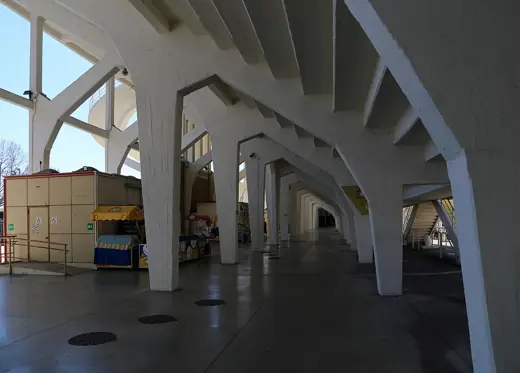 Stadio Artemio Franchi1931 · Florence
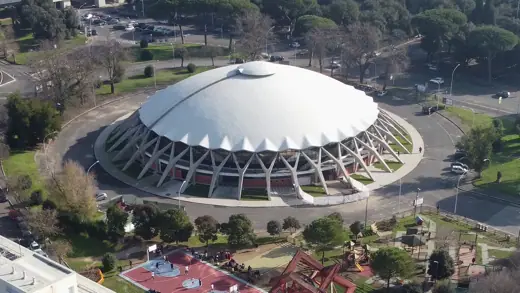 Palazzetto dello Sport1957 · Rome
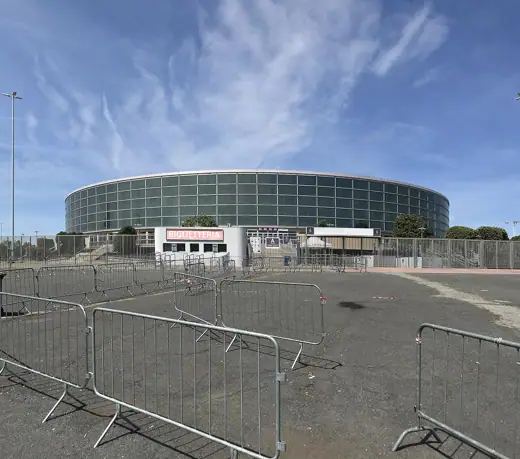 Palazzo dello Sport1960 · Rome
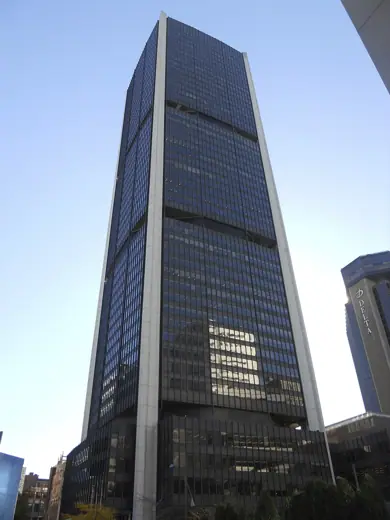 Tour de la Bourse1964 · Montreal
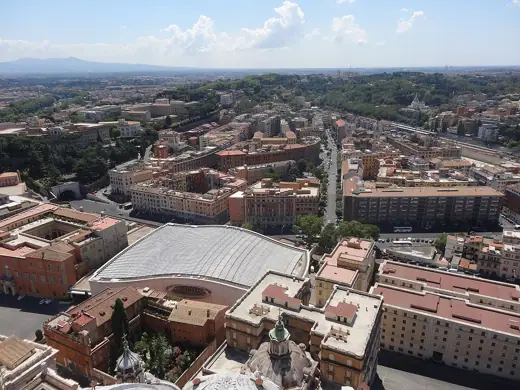 Paul VI Audience Hall1971 · Vatican City
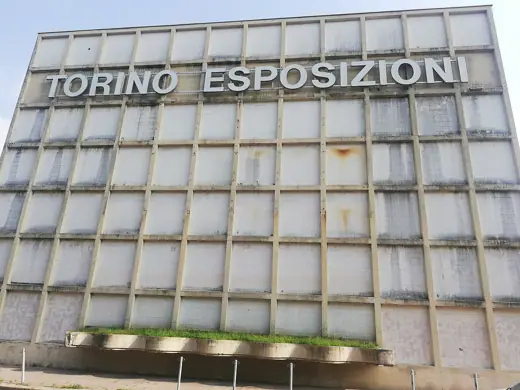 Torino Esposizioni (Hall B)1949 · Turin
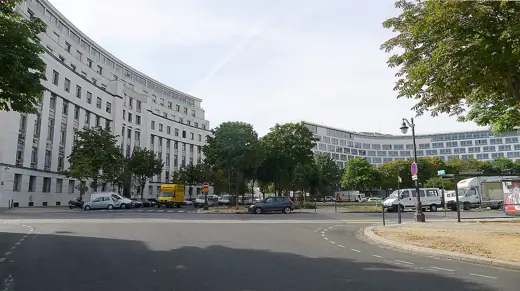 UNESCO Headquarters1958 · Paris
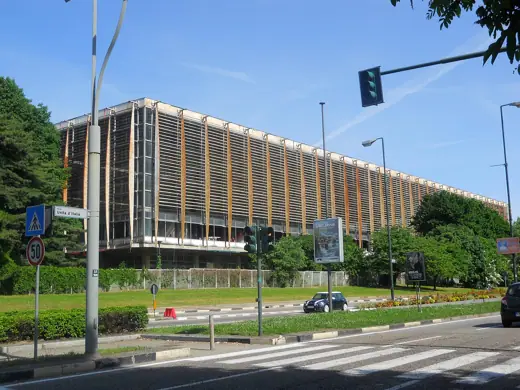 Palazzo del Lavoro1961 · Turin
 Cartiera Burgo1964 · Mantua
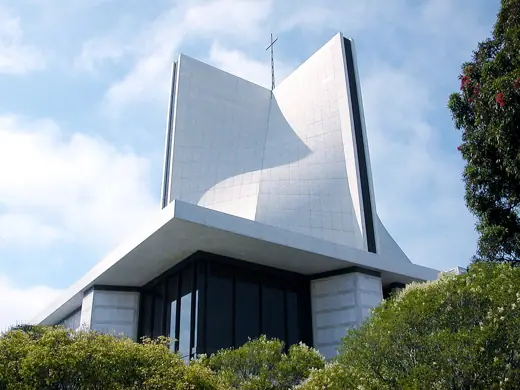 Cathedral of Saint Mary of the Assumption1971 · San Francisco