Paul Rudolph (1918–1997) was an American architect known first for light, inventive houses in Florida and then for heavy, sculptural concrete buildings of American brutalism. He studied under Walter Gropius at Harvard, became an early figure of the Sarasota School of Architecture, and chaired Yale's Department of Architecture from 1958 to 1965, where his students included Norman Foster and Richard Rogers.
Read moreShow less
In Sarasota, the Umbrella House (Hiss Residence) (1953) shades the house, patio and pool with a latticed second roof floating above the first, letting air move to cool it. The Walker Guest House on Sanibel Island (1953) rests on a raised steel frame with movable wooden panels that open the rooms to the outdoors. The Yale Art and Architecture Building in New Haven (1963), a spatially complex concrete structure, is his best-known brutalist work, with the Boston Government Service Center (1971). Late in his career he worked in Asia, and the Lippo Centre in Hong Kong (1988) was the culmination of his ideas about reflective glass. Paul Rudolph's buildings are studied for their complex sections and for the way they shape light and shade.
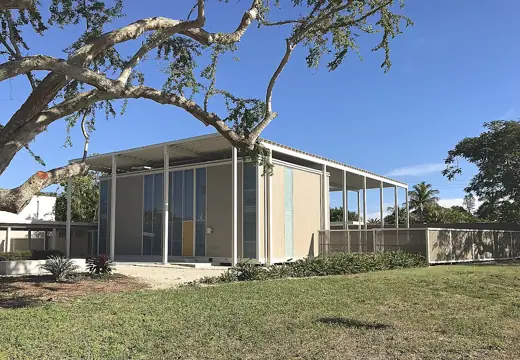 Umbrella House (Hiss Residence)1953 · Sarasota
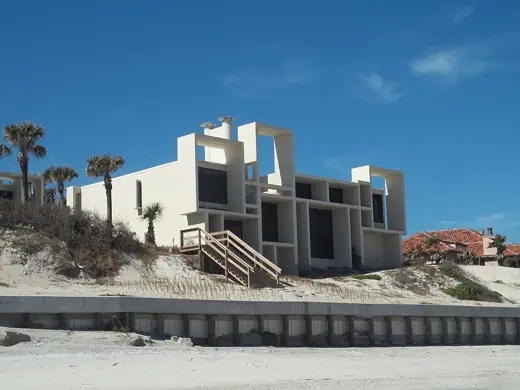 Milam Residence1961 · Ponte Vedra Beach
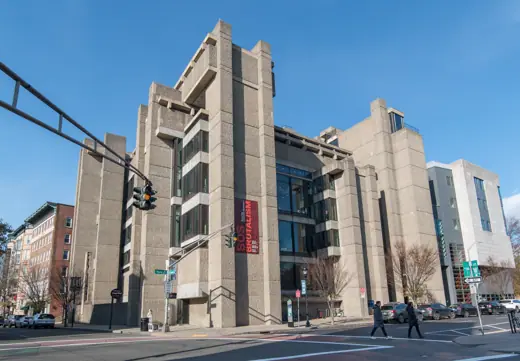 Yale Art and Architecture Building1963 · New Haven
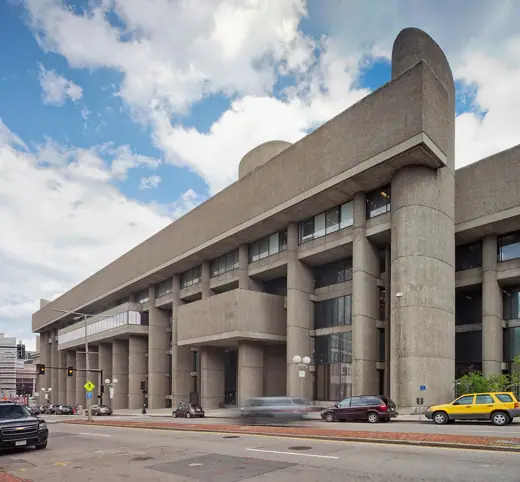 Boston Government Service Center1971 · Boston
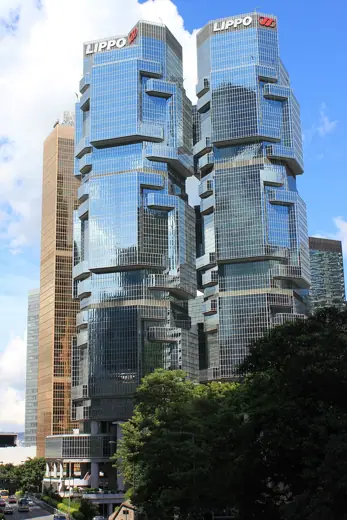 Lippo Centre1988 · Hong Kong
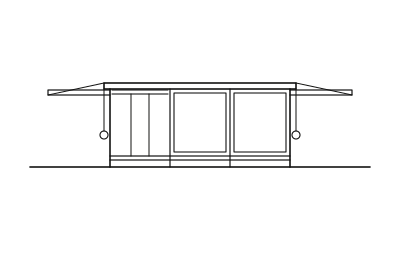 Walker Guest House1953 · Sanibel
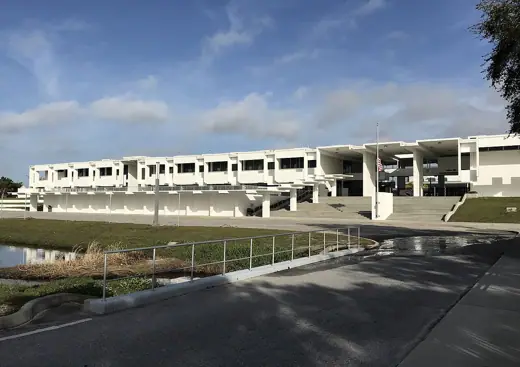 Sarasota High School1959 · Sarasota
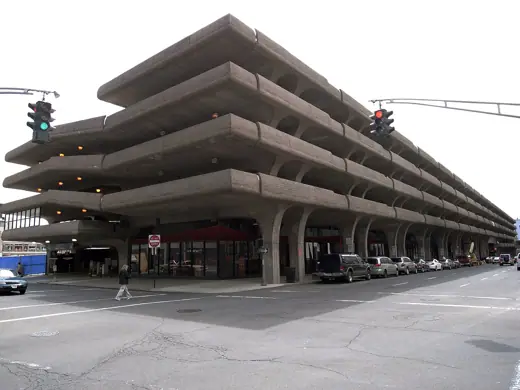 Temple Street Parking Garage1963 · New Haven
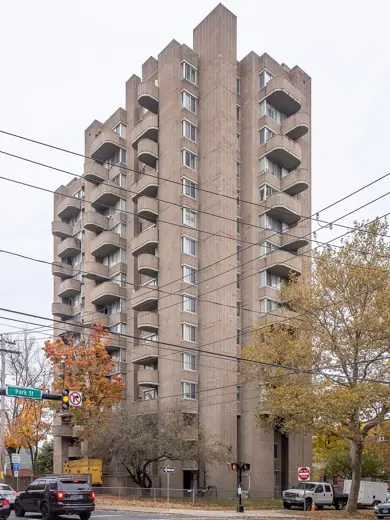 Crawford Manor1966 · New Haven