Hendrik Petrus Berlage (1856–1934) was a Dutch architect and designer, considered the father of modern architecture in the Netherlands and one of the fathers of the Amsterdam School. Born in Amsterdam, he studied at the Zurich Institute of Technology from 1875 to 1878. He drew on the brick architecture of Henry Hobson Richardson and the ideas of Viollet-le-Duc, and his load-bearing bare brick walls, with walls as the makers of form, became founding principles of the Dutch "Hollandse Zakelijkheid". He inspired most Dutch architectural groups of the 1920s, from the Amsterdam School to De Stijl, and received the RIBA Royal Gold Medal in 1932.
Read moreShow less
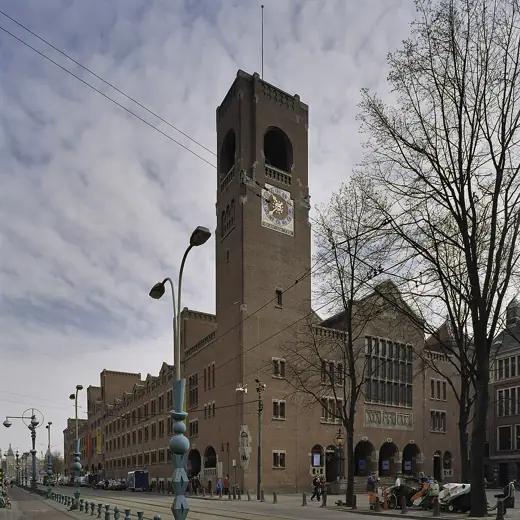
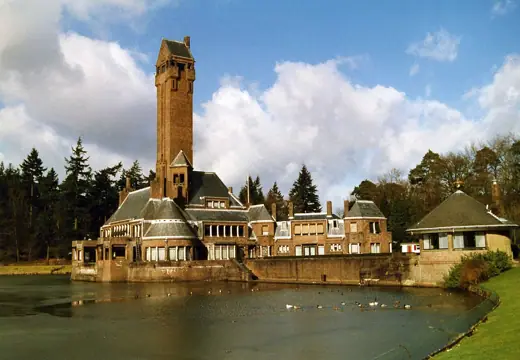
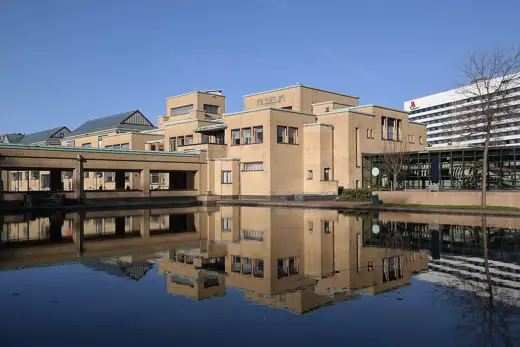
The Beurs van Berlage in Amsterdam (1903), an exchange, is red brick with an iron and glass roof; to Berlage its great brick walls stood for a democratic society: "as individuals insignificant, as a mass a power." For Anton and Helene Kröller-Müller he designed the Jachthuis Sint Hubertus (1920), a hunting lodge on their estate, now De Hoge Veluwe National Park. The Kunstmuseum Den Haag (Gemeentemuseum) (1935), built from 1931 in yellow brick, was finished by his son-in-law Emil Strasser after Berlage died.