Bruno Taut (1880–1938) was a German architect, urban planner and writer, active in the Weimar years and known for his theoretical work as well as his buildings. Born in Königsberg, he founded his own firm in Berlin in 1909. His Glass Pavilion at the 1914 Werkbund Exhibition in Cologne and his utopian sketches, Alpine Architecture (1917), made him a leading Expressionist. A lifelong painter, he stood apart from other modernists in his devotion to colour. When the Nazis came to power he fled to Japan, and in 1936 moved to Turkey to teach at the Academy of Fine Arts in Istanbul, where he died.
Read moreShow less
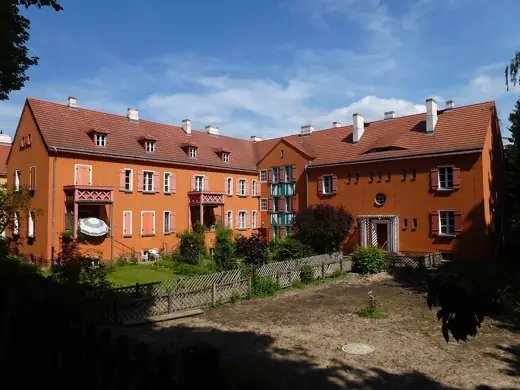
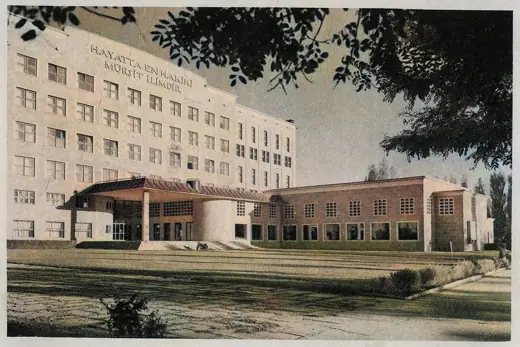
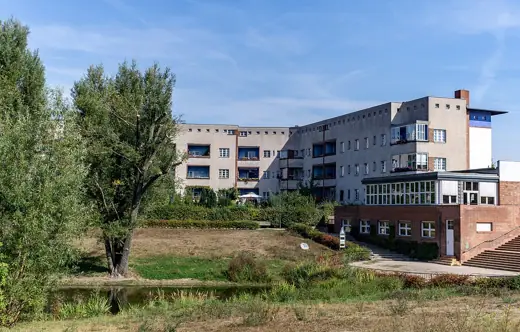
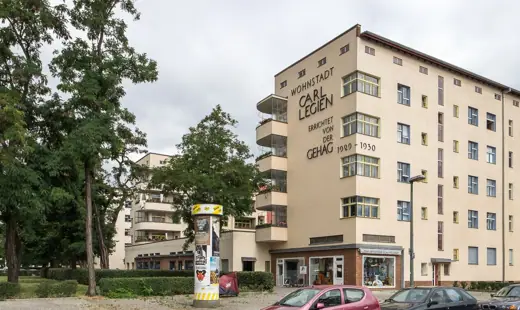
A follower of the garden city movement, he designed Gartenstadt Falkenberg in Berlin (1916). As chief architect of the Berlin housing cooperative GEHAG from 1924, he designed large estates, among them the Hufeisensiedlung (1927), planned with the city planner Martin Wagner as a horseshoe of housing around an ice-age pond and now part of a UNESCO World Heritage Site, and the Wohnstadt Carl Legien (1930). In Ankara he designed the Faculty of Languages, History and Geography (1940) for Turkey's Ministry of Education.