Adolf Loos (1870–1933) was an Austrian and Czechoslovak architect, theorist and polemicist, one of the pioneers of modern architecture and a sharp critic of Art Nouveau. Born in Brno into a family of stonemasons and sculptors, he studied at several schools. His essay Ornament and Crime argued against decoration, in contrast to both the lavish fin-de-siècle style and the Vienna Secession. He developed the Raumplan, or spatial plan, a way of arranging interior rooms on different levels according to their function. He was convicted as a paedophile in 1928, and he died near Vienna in 1933.
Read moreShow less
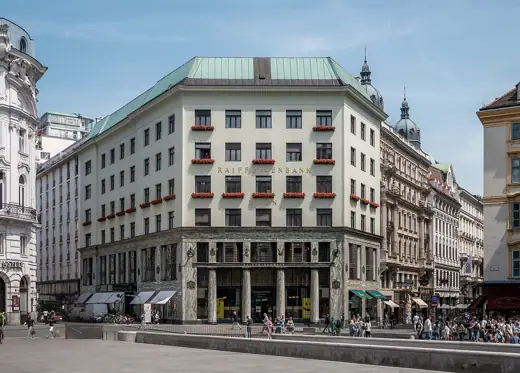
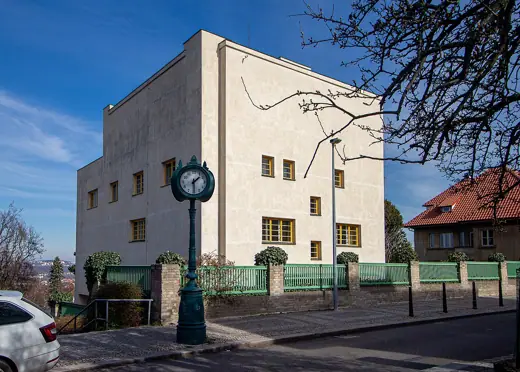
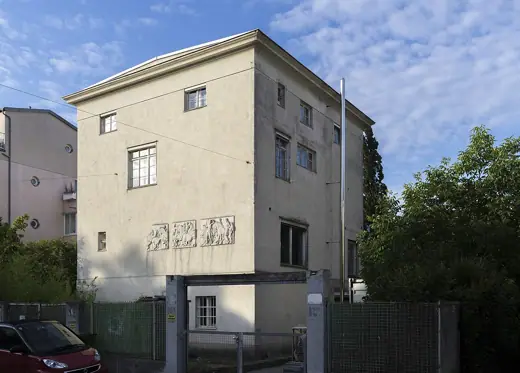
His Looshaus on Vienna's Michaelerplatz (1911), built for the tailors Goldman & Salatsch, was attacked in its day for its plain façade, which earned it the nickname "house without eyebrows". The Rufer House in Vienna (1922), a near-cube about 10 metres on each side kept almost bare outside, is considered the first example of the Raumplan. In the Villa Müller in Prague (1930) the Raumplan reaches its fullest form, with rooms set at different heights and lavish interiors of marble, wood and silk behind a plain exterior.