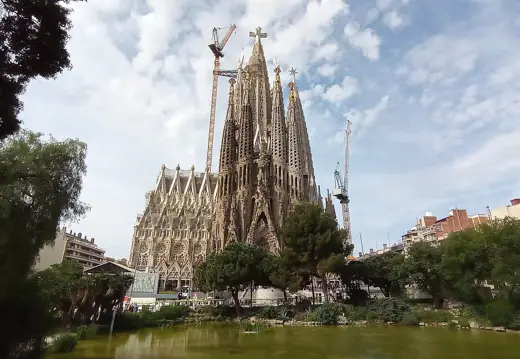
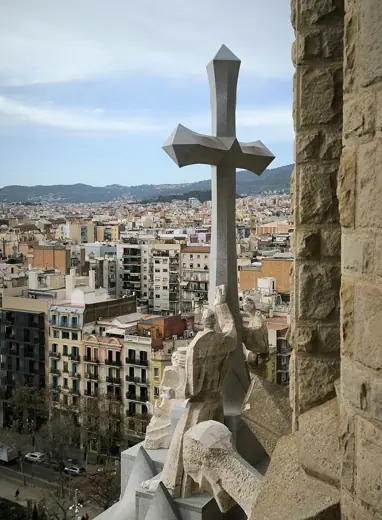
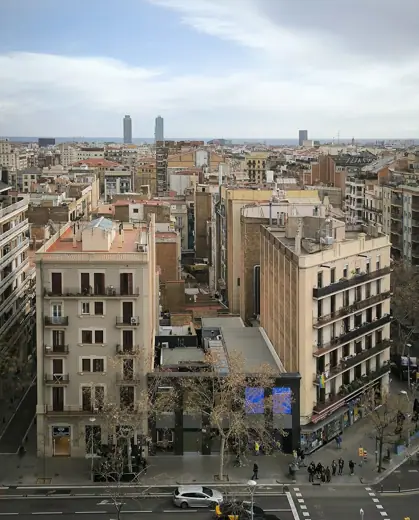
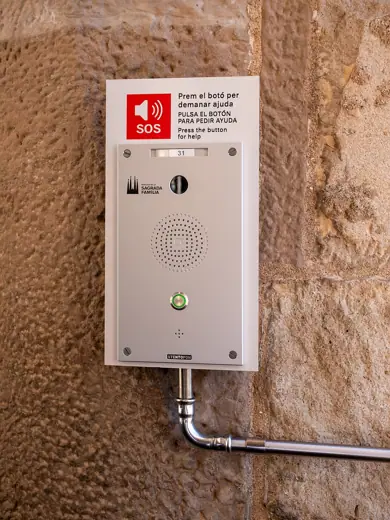
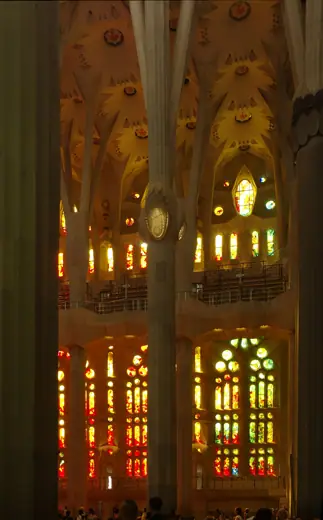
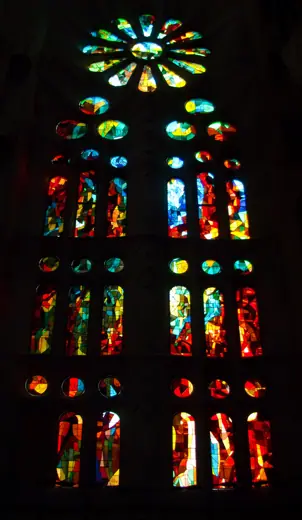
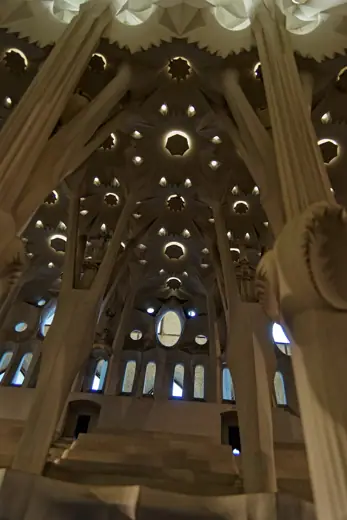
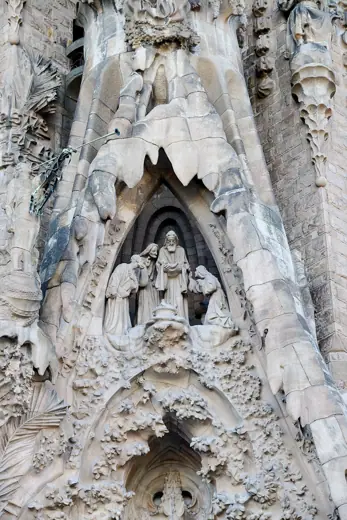
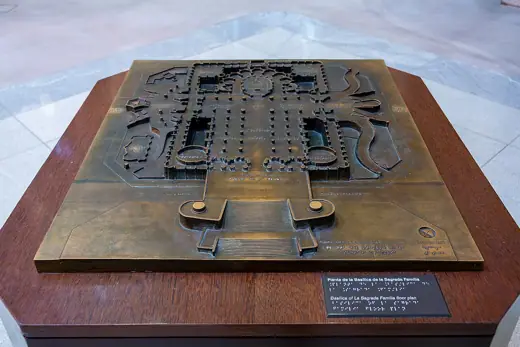
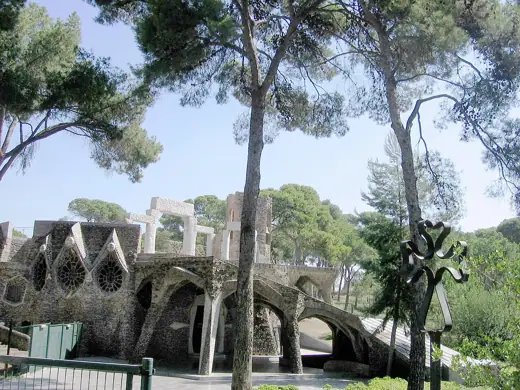
1/9 · Exterior · Sagrada Família, in Barcelona, Catalonia, SpainPhoto: Canaan · CC BY-SA 4.0 · source2/9 · Exterior · Crucifix on the top of La Sagrada Família Barcelona, SpainPhoto: Reda Kerbush · CC BY-SA 4.0 · source3/9 · Exterior · Carrer de Mallorca, 404 and 406, Barcelona, SpainPhoto: Reda Kerbush · CC BY-SA 4.0 · source4/9 · Interior · Intercom inside Basilica Sagrada Familia in BarcelonaPhoto: Matti Blume · CC BY-SA 4.0 · source5/9 · Interior · Spain, Barcelona, Spain, Barcelona, Interior of the Sagrada FamíliaPhoto: Berthold Werner · CC BY-SA 4.0 · source6/9 · Interior · Section of Stained Glass by Vila-GrauPhoto: Better Than Bacon · CC BY 2.0 · source7/9 · Interior · Barcelona - Crypt of La Sagrada Família - Gypsum Model of Central Nave Vault - Side ViewPhoto: Txllxt TxllxT · CC BY-SA 4.0 · source8/9 · Detail · Sagrada Familia, BarcelonaPhoto: Alvesgaspar · CC BY-SA 4.0 · source9/9 · Plan · Tactile floor plan of Basilica Sagrada Familia in BarcelonaPhoto: Matti Blume · CC BY-SA 4.0 · source
Religious · Art Nouveau
Sagrada Familia
Antoni Gaudi · Barcelona, Spain · begun 1882
Key featuresBranching tree-like columns and hyperboloid vaults filter coloured daylight into the nave.
Basílica i Temple Expiatori de la Sagrada Família, or simply Sagrada Família, is a Catholic church in the Eixample district of Barcelona, Catalonia, Spain. Designed by the Catalan architect Antoni Gaudí, it is the tallest church
The style of Sagrada Família is variously likened to Spanish Late Gothic, Catalan Modernism or Art Nouveau. While the style falls within the Art Nouveau period, Nikolaus Pevsner points out that, along with Charles Rennie Mackintosh in Glasgow, Scotland, Gaudí carried the Art Nouveau style far beyond its usual application as a surface decoration.
On 19 March 1882, construction of Sagrada Família began under the architect Francisco de Paula del Villar. In 1883, when Villar resigned, Gaudí took over as chief architect, transforming the project with his architectural and engineering style, combining Gothic and curvilinear Art Nouveau forms. Gaudí devoted the remainder of his life to the project, and he is buried in the church's crypt. At the time of his death in 1926, less than a quarter of the project was complete.




.jpg)


.jpg)