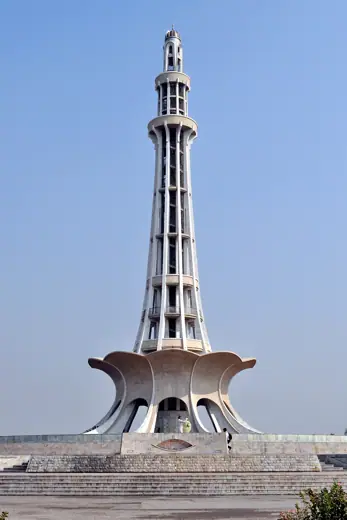
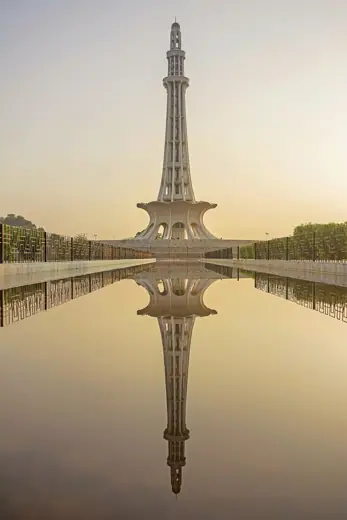
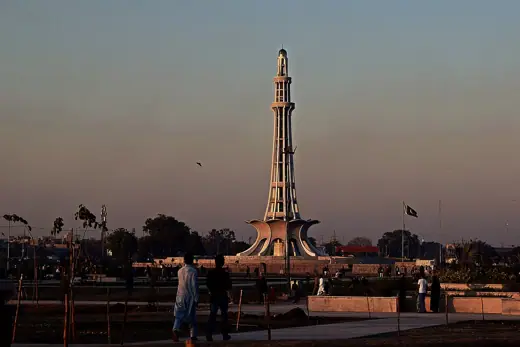
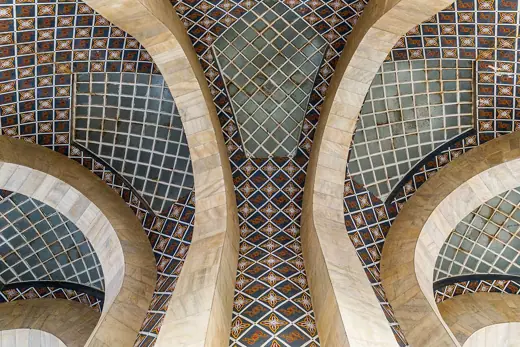
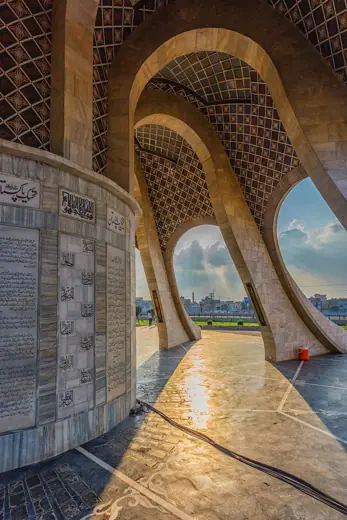
1/6 · Exterior · Minar e PakistanPhoto: Irfan0552007 · CC BY-SA 3.0 · source2/6 · Exterior · This is a photo of a monument in Pakistan identified as thePhoto: Syed Bilal Javaid · CC BY-SA 4.0 · source3/6 · Exterior · This is a photo of a monument in Pakistan identified as thePhoto: IbnSaif2 · CC BY-SA 4.0 · source4/6 · Exterior · This is a photo of a monument in Pakistan identified as thePhoto: Noor Soban · CC BY-SA 4.0 · source5/6 · Interior · This is a photo of a monument in Pakistan identified as thePhoto: Syed Bilal Javaid · CC BY-SA 4.0 · source6/6 · Interior · This is a photo of a monument in Pakistan identified as thePhoto: Syed Bilal Javaid · CC BY-SA 4.0 · source
Memorial · Modernism
Minar-e-Pakistan
Nasreddin Murat-Khan · Lahore, PK · 1968
Key featuresTapering concrete tower rising from a flower-shaped base of stepped platforms, set in a large park.
The Minar-e-Pakistan (Urdu: مینارِ پاکستان, romanised: Mīnār-e-Pākistān; lit. 'Tower of Pakistan') is a public monument tower located in Lahore, Punjab, Pakistan. The tower stands in the Greater Iqbal Park, an urban park in Lahore. The tower was built during 1960–1968 on the site where on 23 March 1940, the All-India Muslim League passed the Lahore Resolution which was later called the Pakistan Resolution – the first official call for a separate and independent homeland for the Muslims of British India, as espoused by the two-nation theory. The resolution eventually helped lead to the creation of Pakistan in 1947.
The tower reflects a blend of Mughal, Islamic and modern architecture. The tower was designed and supervised by Nasreddin Murat-Khan, a Russian-born Pakistani architect and civil engineer.
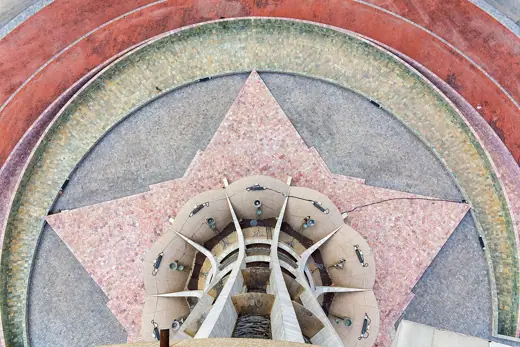
The tower stands on a five-pointed star-shaped platform that is enclosed by two crescent-shaped pools facing each other. One crescent pool is lined with red marble, the other is lined with green marble. The lower portion of the tower itself is shaped into a flower. The area surrounding the monument is covered with flowers.



.jpg)


