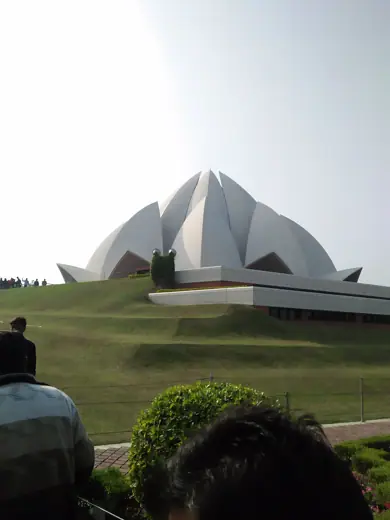
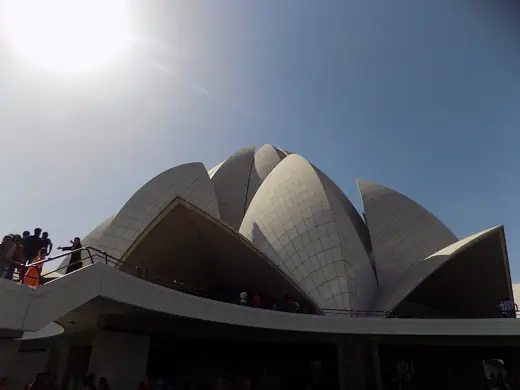
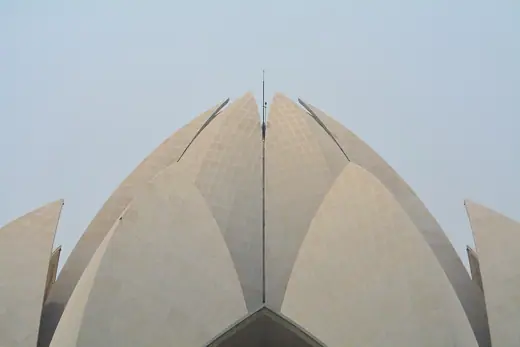
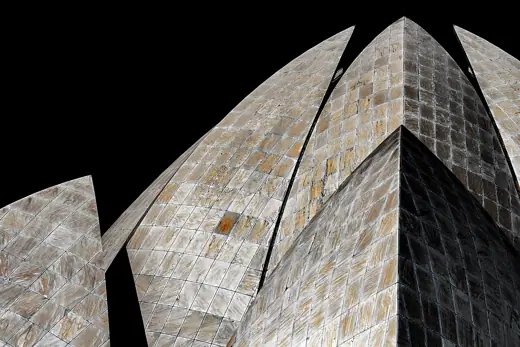
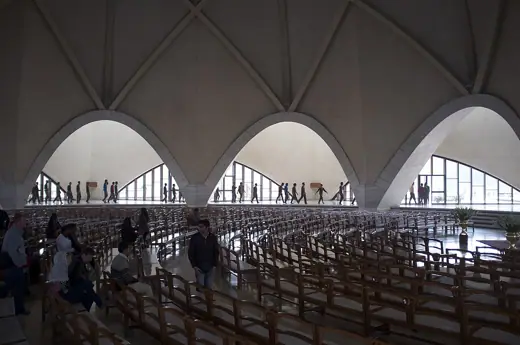
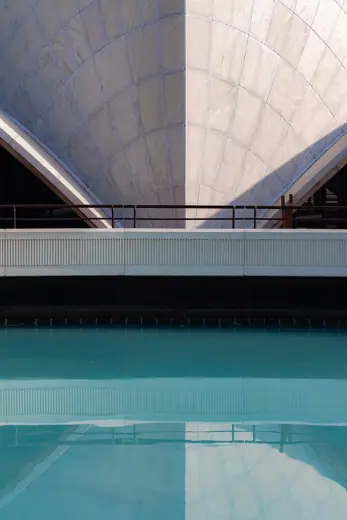
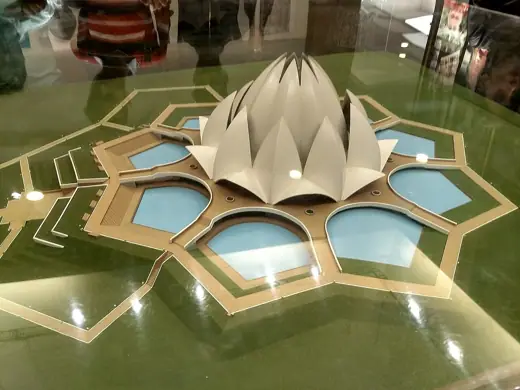
1/7 · Exterior · Side view of lotus templePhoto: Mayankj429 · CC BY-SA 4.0 · source2/7 · Exterior · A very serenity n a peaceful placePhoto: Swarupa1234 · CC BY-SA 4.0 · source3/7 · Exterior · A closer looke at lotus temple , delhiPhoto: Bannuclicks · CC BY-SA 4.0 · source4/7 · Interior · This is NOT what this temple looks like!Photo: Andrew Moore from Johannesburg, South Africa · CC BY-SA 2.0 · source5/7 · Interior · Lotus Temple, Delhi, IndiaPhoto: Aleksandr Zykov from Russia · CC BY-SA 2.0 · source6/7 · Detail · Lotus Temple VIII - Pool Reflection DetailPhoto: Andrew Moore from Johannesburg, South Africa · CC BY-SA 2.0 · source7/7 · Model · A 2.4 suare feet model of lotus temple for sale at lotus temple, delhiPhoto: Buete · CC BY-SA 4.0 · source
Religious · Expressionism
Lotus Temple
Fariborz Sahba · New Delhi, India · 1986
Key featuresTwenty-seven marble-clad concrete petals in three rings around a central hall, set among pools.
The Lotus Temple, also known as the Baháʼí House of Worship, New Delhi, is a Baháʼí House of Worship at Bahapur in south Delhi, India. Designed by the architect Fariborz Sahba, it takes the form of a half-open lotus of 27 free-standing marble-clad concrete petals, arranged in three rings of nine around a central hall. It was dedicated on 24 December 1986 and opened to the public on 1 January 1987.
Sahba travelled across India and Sri Lanka before settling on a form, visiting temples, villages and sacred sites of several religions to study Indian culture. In an interview reprinted in ECC Concord, Sahba said that an Indian Baháʼí first suggested the lotus to him and that the lotus carvings in the Ajanta and Ellora Caves drew his attention to the flower; he described it as a sacred flower in Indian religious tradition and a symbol of purity.
The temple follows the design requirement set for all Baháʼí Houses of Worship: it had to be nine-sided and circular. From outside it reads as a half-open lotus, built from 27 free-standing marble-clad "petals" grouped in threes to make those nine sides. The building is described as Expressionist in style.


,New_Delhi.jpg)


.jpg)

