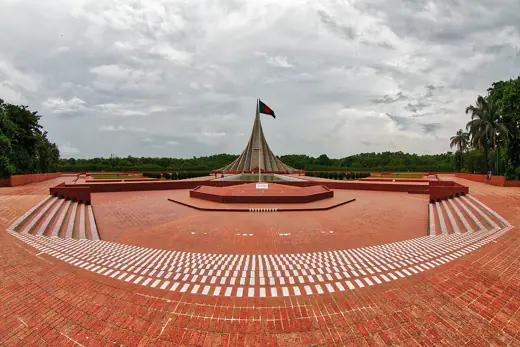
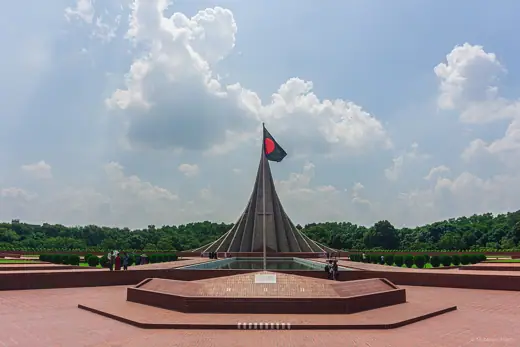
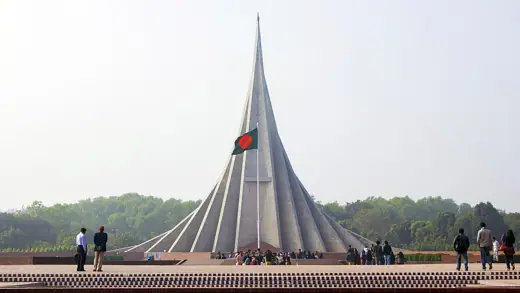
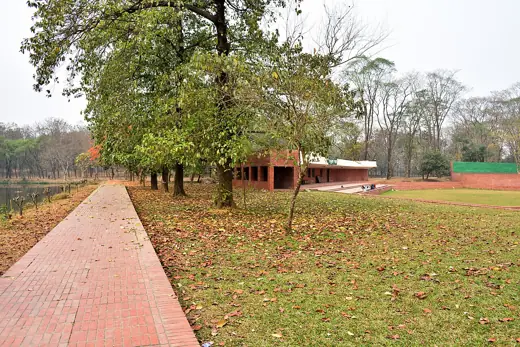
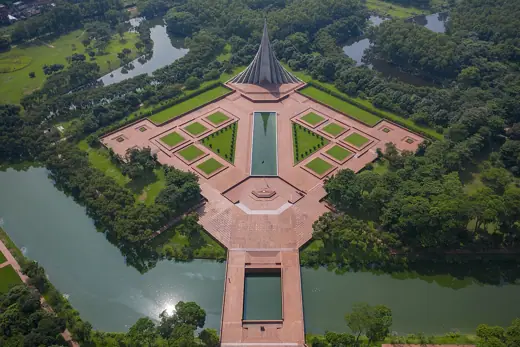
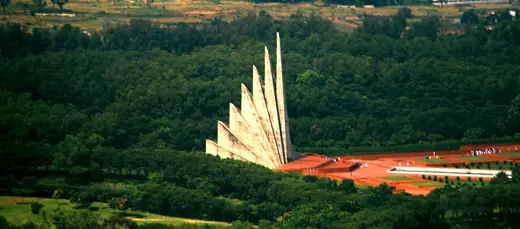
1/6 · Exterior · This is a photo of a monument in Bangladesh identified by the IDPhoto: Azim Khan Ronnie · CC BY-SA 4.0 · source2/6 · Exterior · This is a photo of a monument in Bangladesh identified by the IDPhoto: Mfsam12 · CC BY-SA 4.0 · source3/6 · Exterior · The National Martyrs' Monument of Bangladesh is known as the "Jatiyo Smriti Soudho"Photo: Nasir Khan Saikat · CC BY-SA 2.0 · source4/6 · Exterior · Jatiyo Smriti Soudho (National Martyrs' Monument), Open Air StagePhoto: Chand Ali from DHAKA, BANGLADESH · CC BY 2.0 · source5/6 · Context · This is a photo of a monument in Bangladesh identified by the IDPhoto: Azim Khan Ronnie · CC BY-SA 4.0 · source6/6 · Context · National Martyrs' Memorial , Dhaka, Bangladesh (south-east view)Photo: Shirin Kona · CC BY-SA 4.0 · source
Memorial · Late modernism
Jatiyo Smriti Soudho
Syed Mainul Hossain · Savar, Bangladesh · 1982
Key featuresSeven triangular concrete planes of rising height that change shape with the viewing angle.
The National Martyrs' Memorial (Bengali: জাতীয় স্মৃতিসৌধ, romanized: Jātīẏô Smr̥tisôudhô) is a national monument in Bangladesh. It was built to honour and remember those who died during the Bangladesh Liberation War (as well as the genocide) in 1971, which resulted in Bangladesh's independence from Pakistan. The monument is located in Savar, about 35 km northwest of the capital city, Dhaka. It was designed by Syed Mainul Hossain and built by Concord Group.
The monument consists of seven pairs of triangular walls or prisms. The outermost pair is the shortest but also the widest in span, while the inner pairs gradually change in proportion, with the innermost pair forming the structure's peak. Each of these seven pairs of walls represents a significant chapter in the history of Bangladesh, namely the 1952 Bengali language movement, the 1954 provincial election victory of the United Front, the 1956 Constitution Movement, the 1962 East Pakistan Education movement, the 1966 six point movement, the 1969 mass uprising, and the climactic event of the 1971 Liberation War (through which Bangladesh became an independent sovereign state). The architecture and landscaping are designed to evoke the resilience and struggle of the Bangladeshi people during the war.



.jpg)

,_Open_Air_Stage_(32910772511).jpg)

.jpg)