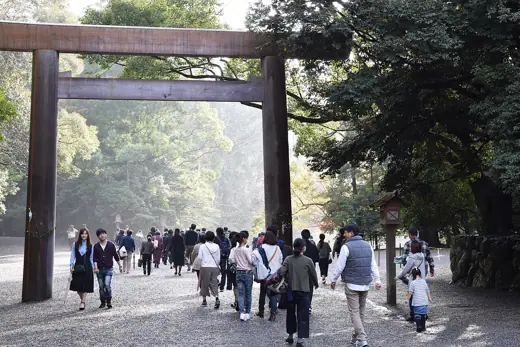
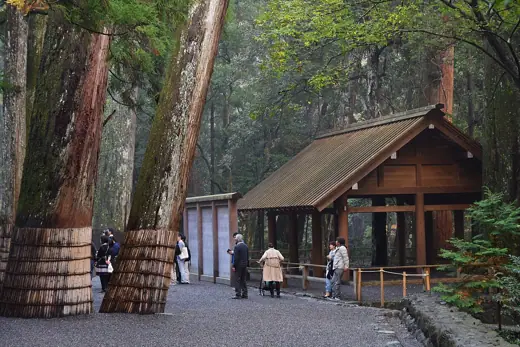
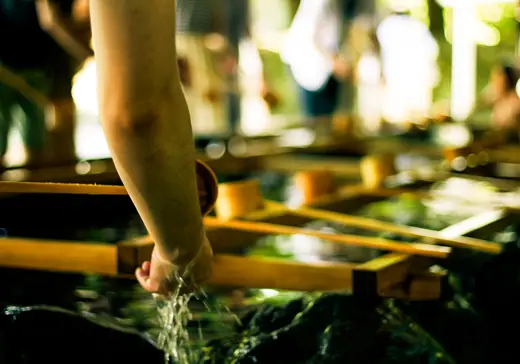
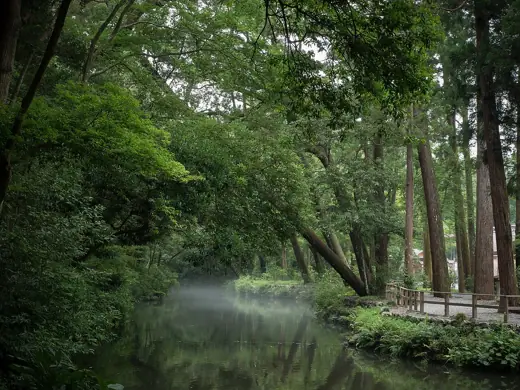
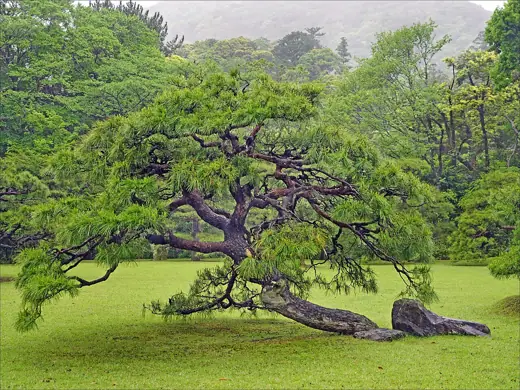
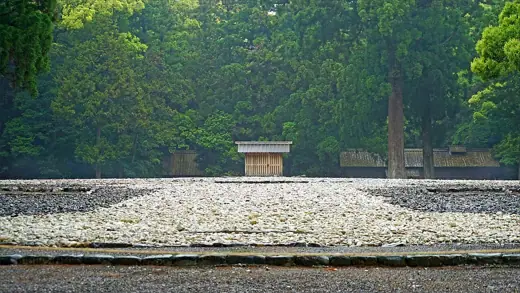
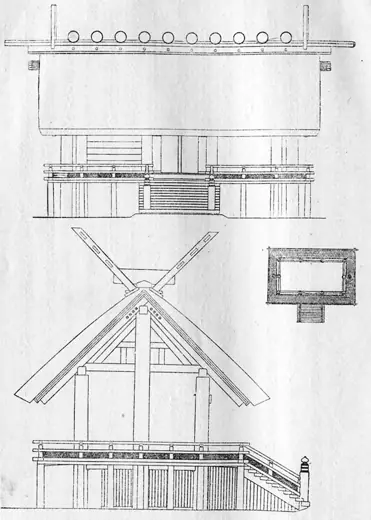
1/7 · Exterior · Ise Grand Shrine, Mie Prefecture, JapanPhoto: 雷太 · CC BY 2.0 · source2/7 · Exterior · Ise Grand Shrine, Mie Prefecture, JapanPhoto: 雷太 · CC BY 2.0 · source3/7 · Exterior · @ JapanPhoto: Ellie from London , UK · CC BY 2.0 · source4/7 · Exterior · Mist of the Gods (pond at Ise Grand Shrine at 5 am), Mie Prefecture, JapanPhoto: Big Ben in Japan · CC BY-SA 2.0 · source5/7 · Interior · Le sanctuaire shintoïste d'Ise est le plus important du JaponPhoto: Jean-Pierre Dalbéra from Paris, France · CC BY 2.0 · source6/7 · Interior · Le sanctuaire shintoïste d'Ise est le plus important du JaponPhoto: Jean-Pierre Dalbéra from Paris, France · CC BY 2.0 · source7/7 · Plan · Front and Side View of the Honden at the Ise ShrinePhoto: Katsukichi Hattori · Public domain · source
Religious · Historic precedent
Ise Grand Shrine
Shinto shrine carpenters · Ise, Japan · 2013
Key featuresUnpainted cypress shrine rebuilt on an adjacent plot every 20 years, keeping the craft alive.
The Ise Shrine (Japanese: 伊勢神宮, Hepburn: Ise Jingū), located in Ise, Mie Prefecture of Japan, is a Shinto shrine dedicated to the solar goddess Amaterasu Ōmikami and the grain goddess Toyouke-hime. Also known simply as Jingū (神宮), Ise Shrine is a shrine complex composed of many Shinto shrines centered on two main shrines, Naikū (内宮) and Gekū (外宮).
The Inner Shrine, Naikū (also officially known as "Kōtai Jingū"), is dedicated to the worship of Amaterasu and is located in the town of Uji-tachi, south of central Ise, where she is believed to dwell. The shrine buildings are made of solid cypress wood and use no nails, instead being joined with wood. The Outer Shrine or Gekū (also officially known as the Toyouke Daijingū), is located about six kilometers from Naikū and dedicated to Toyouke-hime, the female deity of agriculture, rice harvest and industry. Besides Naikū and Gekū, there are an additional 123 Shinto shrines in Ise City and the surrounding areas, 91 of them connected to Naikū and 32 to Gekū.


.jpg)
.jpg)

,_Mie_Prefecture;_July_2015.jpg)
_(42212995765).jpg)
_(29474620227).jpg)
