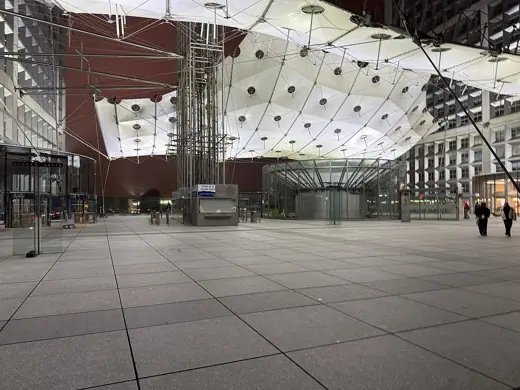
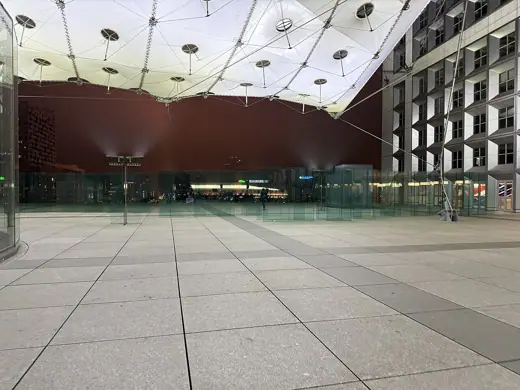
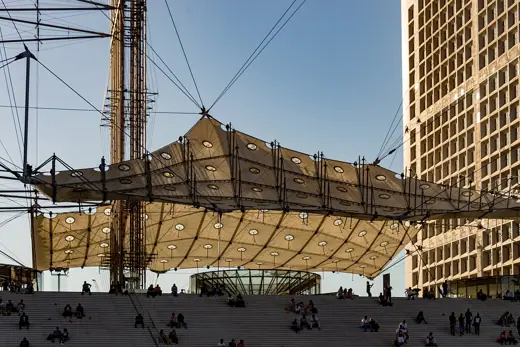
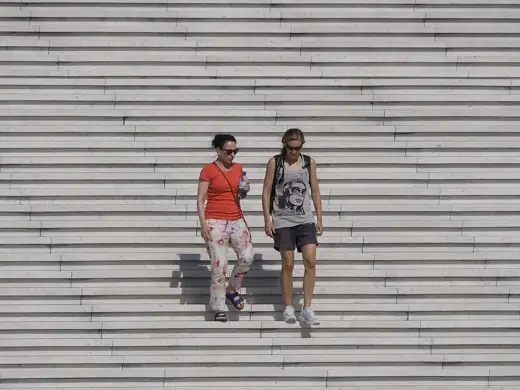
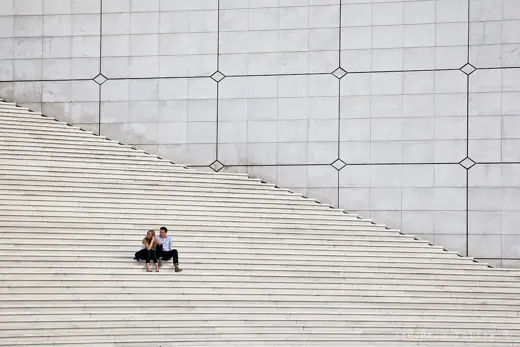
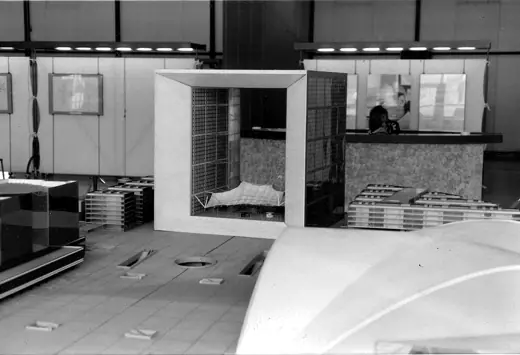
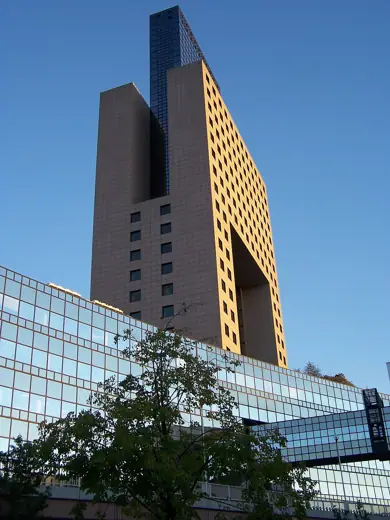
1/7 · Exterior · Esplanade Grande Arche Défense, PuteauxPhoto: Chabe01 · CC BY-SA 4.0 · source2/7 · Exterior · Esplanade Grande Arche Défense, PuteauxPhoto: Chabe01 · CC BY-SA 4.0 · source3/7 · Exterior · 56663-ParisPhoto: xiquinhosilva from Cacau · CC BY 2.0 · source4/7 · Exterior · Grande Arche @ La Défense @ ParisPhoto: Guilhem Vellut from Annecy, France · CC BY 2.0 · source5/7 · InteriorPhoto: Edgardo W. Olivera from Montevideo, Uruguay · CC BY 2.0 · source6/7 · Interior · Grande Arche, La Défense, FrancePhoto: Frédérik Vuille · CC BY 2.0 · source7/7 · Model · Paris 1988 - Modell Grande ArchePhoto: David Wintzer · CC BY-SA 4.0 · source
Office & tower · Late modernism
Grande Arche
Johan Otto von Spreckelsen · Puteaux, France · 1989
Key featuresA hollow marble-clad cube with offices in its sides frames the end of the Paris historic axis.
La Grande Arche de la Défense (French: [la ɡʁɑ̃d aʁʃ d(ə) la defɑ̃s]; "The Great Arch of the Defense"), originally called La Grande Arche de la Fraternité (French: [fʁatɛʁnite]; "Fraternity"), is a monument and building in the business district of La Défense and in the commune of Puteaux, to the west of Paris, France. It is usually known as the Arche de la Défense or simply as La Grande Arche.
In 1982, a great national design competition was launched as an initiative of French president François Mitterrand. Danish architect Johan Otto von Spreckelsen (1929–1987) and Danish engineer Erik Reitzel (1941–2012) designed the winning entry to be a late-20th-century version of the Arc de Triomphe: a monument to humanity and humanitarian ideals rather than military victories. The construction of the monument began in 1985, with most of the work being carried out by French civil engineering company Bouygues.




_-_2025-01-11_-_1.jpg)
_-_2025-01-11_-_2.jpg)
.jpg)
.jpg)
.jpg)

