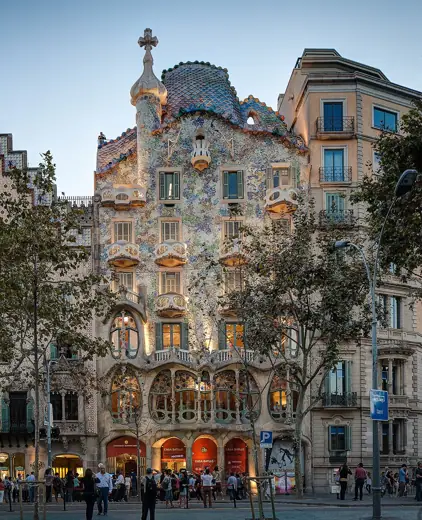
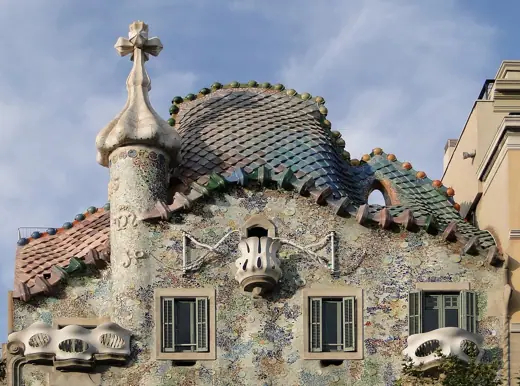
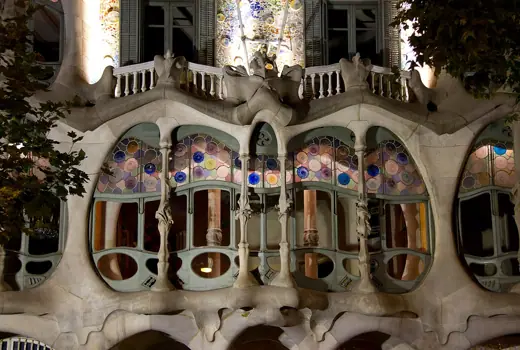
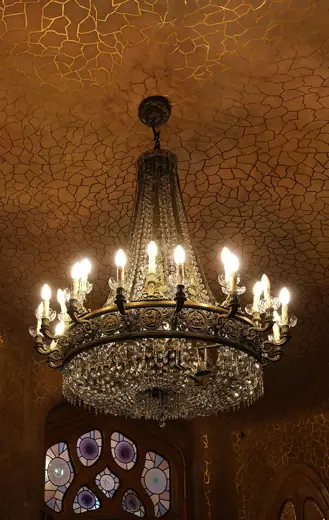
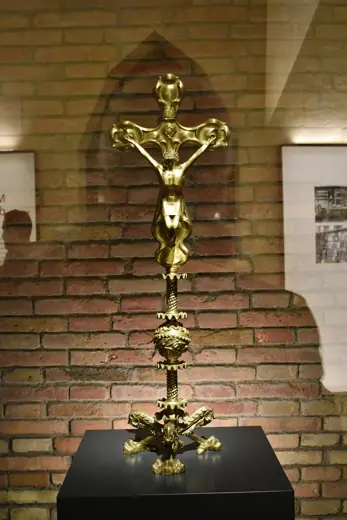
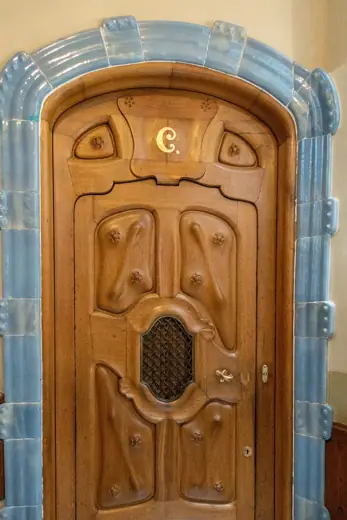
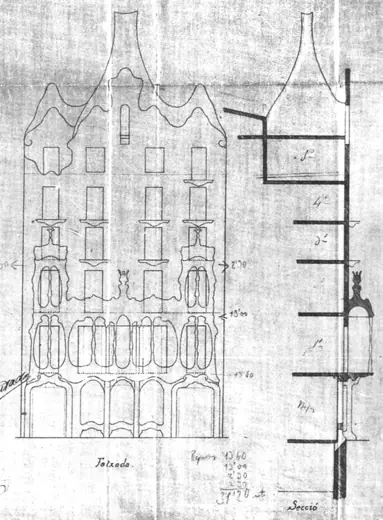
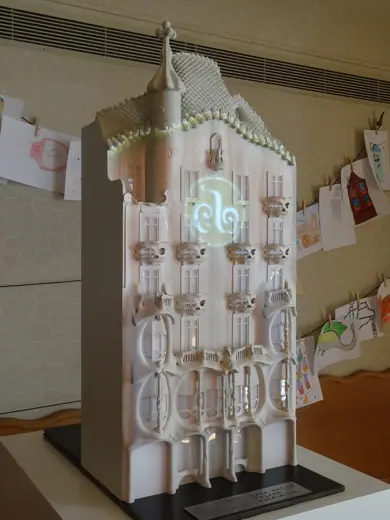
1/9 · Exterior · Casa Batlló, a Modernista Antoni Gaudí building on Passeig de Gràcia in Barcelona, Catalonia, SpainPhoto: ChristianSchd · CC BY-SA 3.0 · source2/9 · Exterior · Top part of the facade of Casa Batlló designed by Antoni Gaudi between 1904 and 1906, Barcelona, SpainPhoto: Bernard Gagnon · CC BY-SA 3.0 · source3/9 · Exterior · Casa Batllo Front at Night 2Photo: Tony Hisgett from Birmingham, UK · CC BY 2.0 · source4/9 · Interior · Casa Batló, BarcelonaPhoto: Alvesgaspar · CC BY-SA 4.0 · source5/9 · Interior · Chandelier in the Noble Room of Casa Batlló, BarcelonaPhoto: Alvesgaspar · CC BY-SA 4.0 · source6/9 · Interior · Crucifijo de Carles Mani para el oratorio de la Casa BatllóPhoto: Canaan · CC BY-SA 4.0 · source7/9 · DetailPhoto: Kent Wang from Barcelona, Spain · CC BY-SA 2.0 · source8/9 · Section · Fachada y sección de la Casa Batlló, de Antoni Gaudí (1904)Photo: Antoni Gaudí · Public domain · source9/9 · ModelPhoto: Jordiferrer · CC BY-SA 3.0 · source
Housing · Art Nouveau
Casa Batlló
Antoni Gaudi · Barcelona, Spain · 1906
Key featuresBone-like facade and a light well tiled from deep to pale blue to even out the daylight.
Casa Batlló (Catalan pronunciation: [ˈkazə βəˈʎːo] ) is a building in the center of Barcelona, Spain. It was designed by Antoni Gaudí, and is considered one of his masterpieces. A remodel of a previously built house, it was redesigned in 1904 by Gaudí (although the actual construction had not begun at this point) and has been refurbished several times since. Gaudí's assistants Domènec Sugrañes i Gras, Josep Canaleta and Joan Rubió also contributed to the renovation project.
Casa Batlló is located on the Passeig de Gràcia in the Eixample district and forms part of a row of houses known as the Illa de la Discòrdia (or Mansana de la Discòrdia, the "Block of Discord"), so named because it features four striking, and strikingly different, buildings by noted Modernista architects of Barcelona.
Like everything Gaudí designed, Casa Batlló is only identifiable as Modernisme in the broadest sense. The ground floor, in particular, has unusual tracery, irregular oval windows and sculpted stonework with sinuous, squiggly forms. There are few straight lines, and much of the façade is decorated with a colorful mosaic made of broken ceramic tiles (trencadís).
In 2005, Casa Batlló became a UNESCO World Heritage Site.




.jpg)


.jpg)
.jpg)
