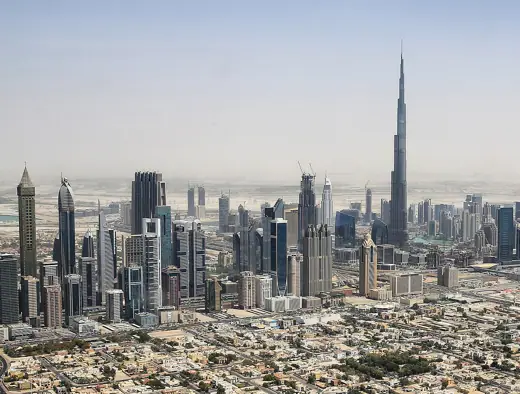
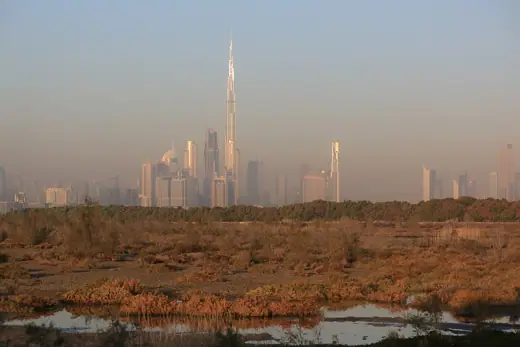
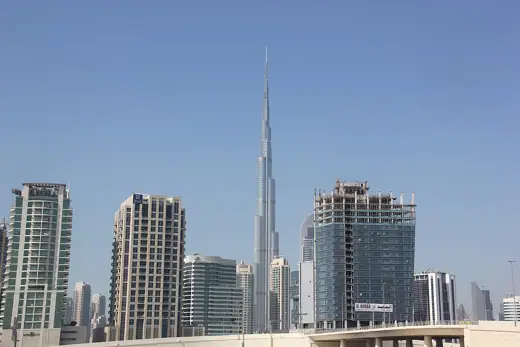
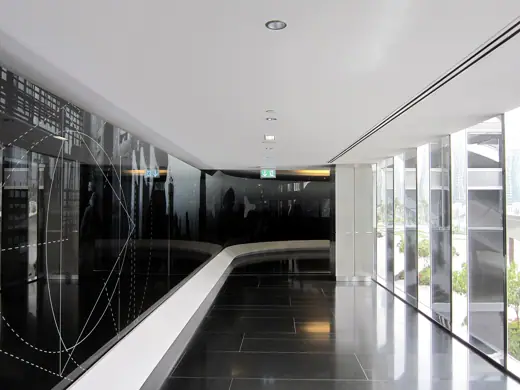
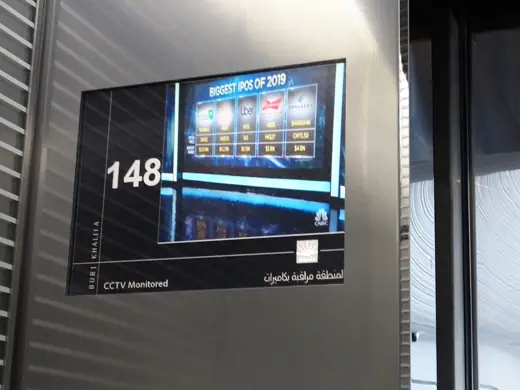
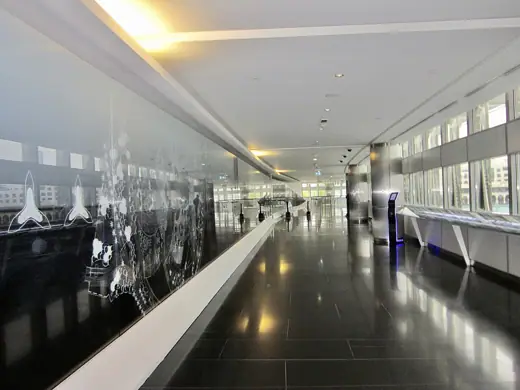
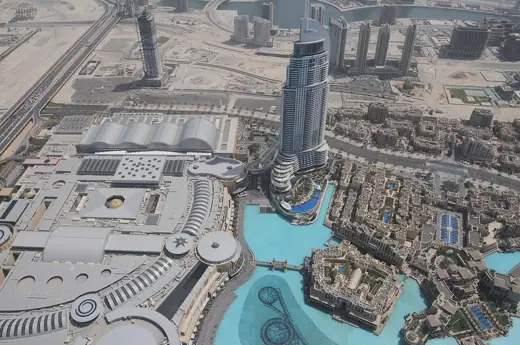
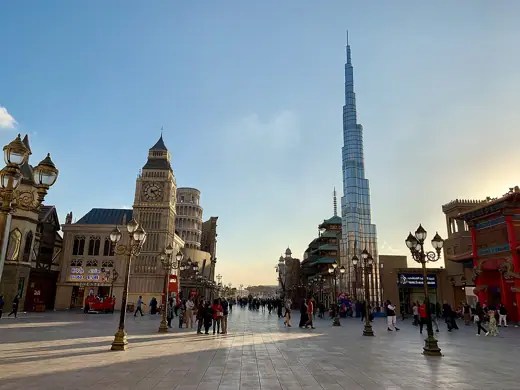
1/8 · Context · Skyline of Downtown Dubai with Burj Khalifa from a Helicopter (crop of File:Dubai skyline 2015.jpg)Photo: Tim.Reckmann · CC BY-SA 3.0 · source2/8 · Exterior · Dubai Burj Khalifa Sunrise hitting the Burj KhalifaPhoto: Abspires40 from Dubai, UAE · CC BY 2.0 · source3/8 · ExteriorPhoto: Laika ac · CC BY-SA 2.0 · source4/8 · Exterior · The making of Burj Khalifa, DubaiPhoto: Ank Kumar · CC BY-SA 4.0 · source5/8 · Interior · Level 145 (Burj al Khalifa)Photo: Leon petrosyan · CC BY-SA 4.0 · source6/8 · Interior · The making of Burj Khalifa, DubaiPhoto: Ank Kumar · CC BY-SA 4.0 · source7/8 · Context · Downtown Burj KhalifaPhoto: Citizen59 from Tunis, Tunisie · CC BY-SA 2.0 · source8/8 · Context · Inside the Global Village in DubaiPhoto: Slayym · CC BY-SA 4.0 · source
Office & tower · Contemporary
Burj Khalifa
SOM · Dubai, United Arab Emirates · 2010
Key featuresA Y-shaped buttressed core steps back in a spiral, breaking up wind vortices up its height.
The Burj Khalifa (previously known as Burj Dubai prior to inauguration) is a megatall skyscraper in Dubai, United Arab Emirates. Designed by the SOM architectural firm, it is the world's tallest structure, with a total height of 829.8 m (2,722 ft, or just over half a mile) and a roof height (excluding the antenna, but including a 242.6 m spire) of 828 m (2,717 ft). It has been the tallest building in the world since its complete inauguration in 2011, surpassing Taipei 101, which had held the record since 2004.
The tower was designed by Skidmore, Owings, and Merrill (SOM), which also designed the Willis Tower (formerly the Sears Tower) in Chicago and the One World Trade Center in New York City. Burj Khalifa uses the bundled tube design of the Willis Tower, invented by Fazlur Rahman Khan. Due to its tubular system, proportionally only half the amount of steel was used in the construction, compared to the Empire State Building. Khan's contributions to the design of tall buildings have had a profound impact on architecture and engineering. It would be difficult to find any worldwide practices in the design of tall buildings that have not been directly or indirectly influenced by his work.


.jpg)
.jpg)
.jpg)
_09.jpg)
.jpg)
_11.jpg)
.jpg)
