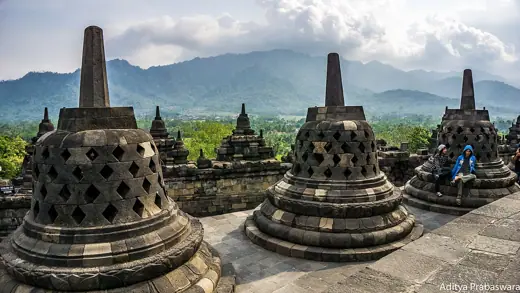
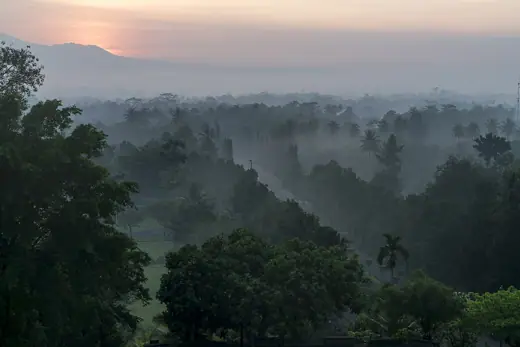
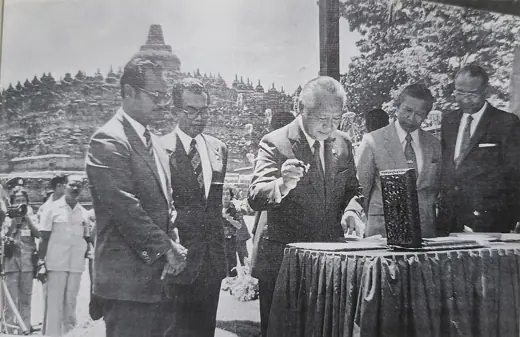
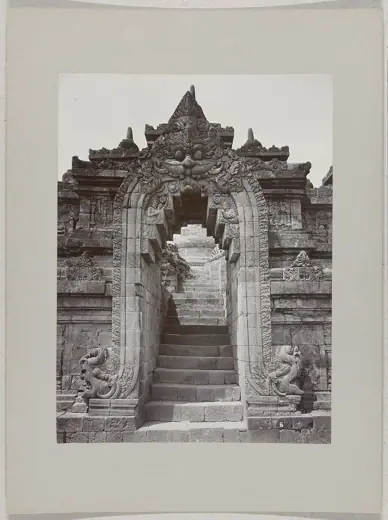
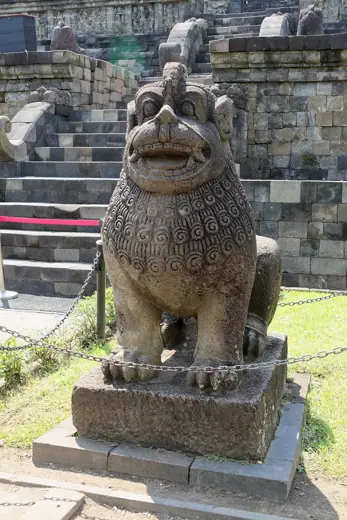
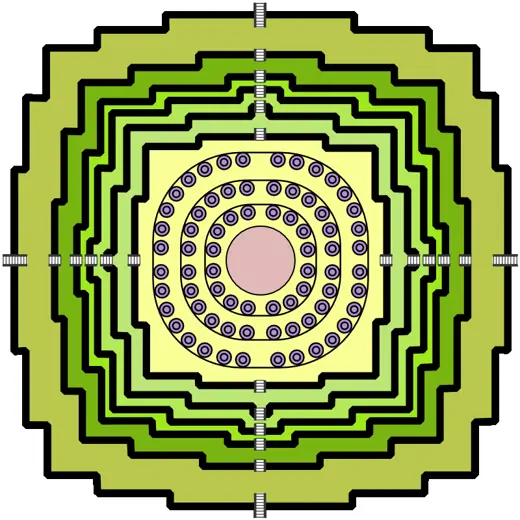
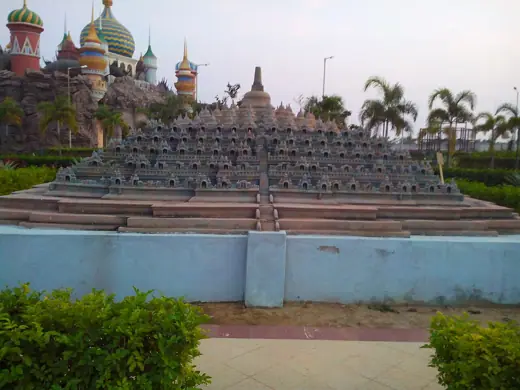
1/9 · Exterior · Taken on top of the Borobudur templePhoto: Aditya Prabaswara · CC BY 2.0 · source2/9 · Exterior · Sunrise at BorobudurPhoto: Christopher Michel from San Francisco, USA · CC BY 2.0 · source3/9 · Exterior · Soeharto inaugurated the completion of the restoration of Borobudur Temple, a world monumentPhoto: Photo owner:
Government of Republic of Indonesia
Photographer:
Unknown author Unknown autho · Public domain · source4/9 · Exterior · See you on top !Photo: Renata ari lusiana · CC BY-SA 4.0 · source5/9 · Interior · Identificatie Titel(s): Poort met reliëfs van de Borobudur (Boroboedoer), nabij Magelang, Nederlands-Indië.78Photo: Rijksmuseum · CC0 · source6/9 · Interior · Borobudur, Java, IndonesiaPhoto: Jakub Hałun · CC BY-SA 4.0 · source7/9 · Plan · en:Borobudur ground planPhoto: en:User:Indon · CC BY-SA 3.0 · source8/9 · Model · This is a miniature replica, in Prayag Film city, of the famous Borobudur temple in IndonesiaPhoto: Kunalrks · CC BY-SA 4.0 · sourcePhotos unavailable9/9Unknown author Unknown author · CC BY-SA 3.0 · source
Religious · Historic precedent
Borobudur
Sailendra builders · Magelang, ID · c. 825
Key featuresA stone stupa-mountain of square terraces and round platforms, climbed along carved clockwise galleries.
Borobudur, also transcribed Barabudur (Indonesian: Candi Borobudur, Javanese: ꦕꦤ꧀ꦝꦶꦧꦫꦧꦸꦝꦸꦂ, romanized: Candhi Barabudhur), is a 9th-century Mahayana Buddhist temple in Magelang Regency, near the town of Muntilan, northwest of the city of Yogyakarta, in Central Java, Indonesia.
The archaeological excavation into Borobudur during reconstruction suggests that adherents of Hinduism or a pre-Indic faith had already begun to erect a large structure on Borobudur's hill before the site was appropriated by Buddhists. The foundations are unlike any Hindu or Buddhist shrine structures, and therefore, the initial structure is considered more indigenous Javanese than Hindu or Buddhist.
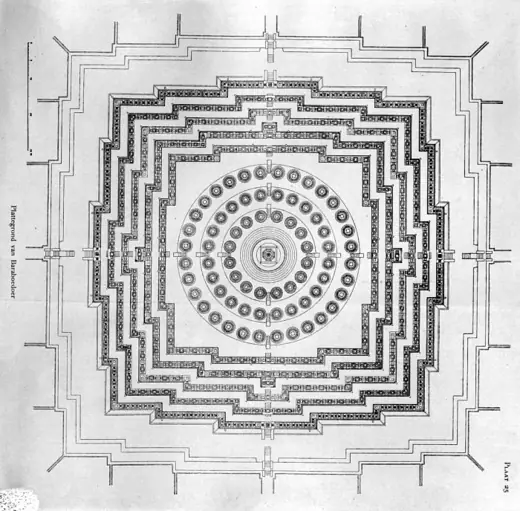
Constructed of gray andesite-like stone, the temple consists of nine stacked platforms, six square and three circular, topped by a central dome. It is decorated with 2,672 relief panels and originally 504 Buddha statues. The central dome is surrounded by 72 Buddha statues, each seated inside a perforated stupa. The monument guides pilgrims through an extensive system of stairways and corridors with 1,460 narrative relief panels on the walls and the balustrades. Borobudur has one of the world's most extensive collections of Buddhist reliefs.



.jpg)


,_nabij_Magelang,_Nederlands-Indi%C3%AB._78._Boroboedoer_(titel_op_object),_RP-F-00-5346-85.jpg)


