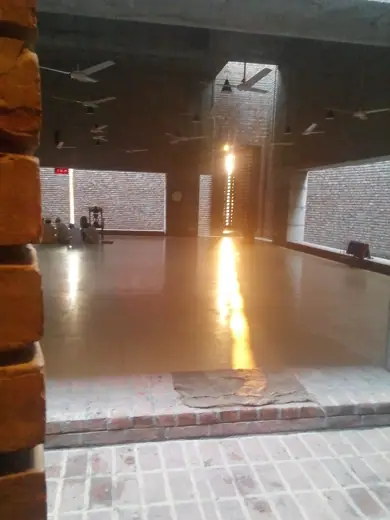
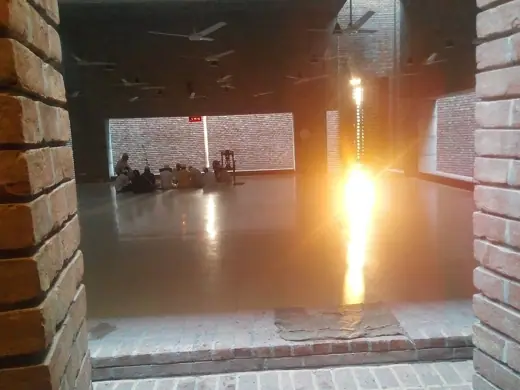
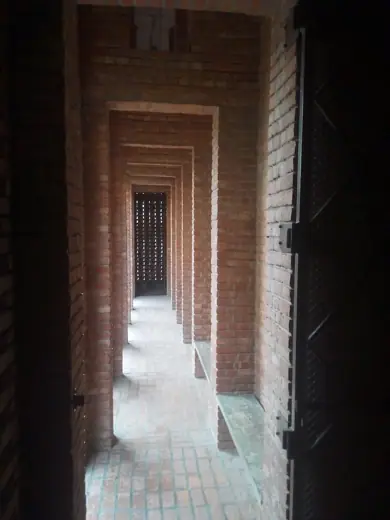
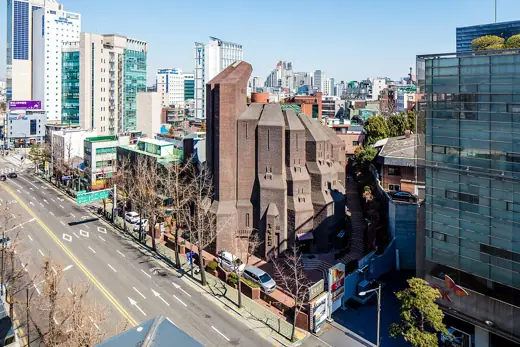
The Bait Ur Rouf Mosque (Bengali: বায়তুর রউফ জামে মসজিদ, Arabic: الجامع بيت الرؤوف) is a distinctive urban mosque located in Dhaka, Bangladesh. Designed by Bangladeshi architect Marina Tabassum and completed in 2012, it has been called a refuge of spirituality in urban Dhaka and received recognition for its beautiful use of natural light and for challenging the status quo of traditional mosque design. Instead of traditional symbolism such as domes and minarets, the mosque relies on open space and the rich interplay of light and shadow to create a prayer space that elevates the spirit.
The mosque was designed by Marina Tabassum, a female architect from Bangladesh. Known for designing the Museum of Independence in Dhaka, she is recognized as one of the country's top architects and one of only a few women architects in the country. In Bangladesh, it is unusual for a female to design a mosque – Bangladeshi women rarely even enter a mosque, praying instead at home, since few mosques have dedicated sections for women. Tabassum visited more than 100 mosques before designing Bait Ur Rouf Mosque, despite having hardly ever entered a mosque previously.